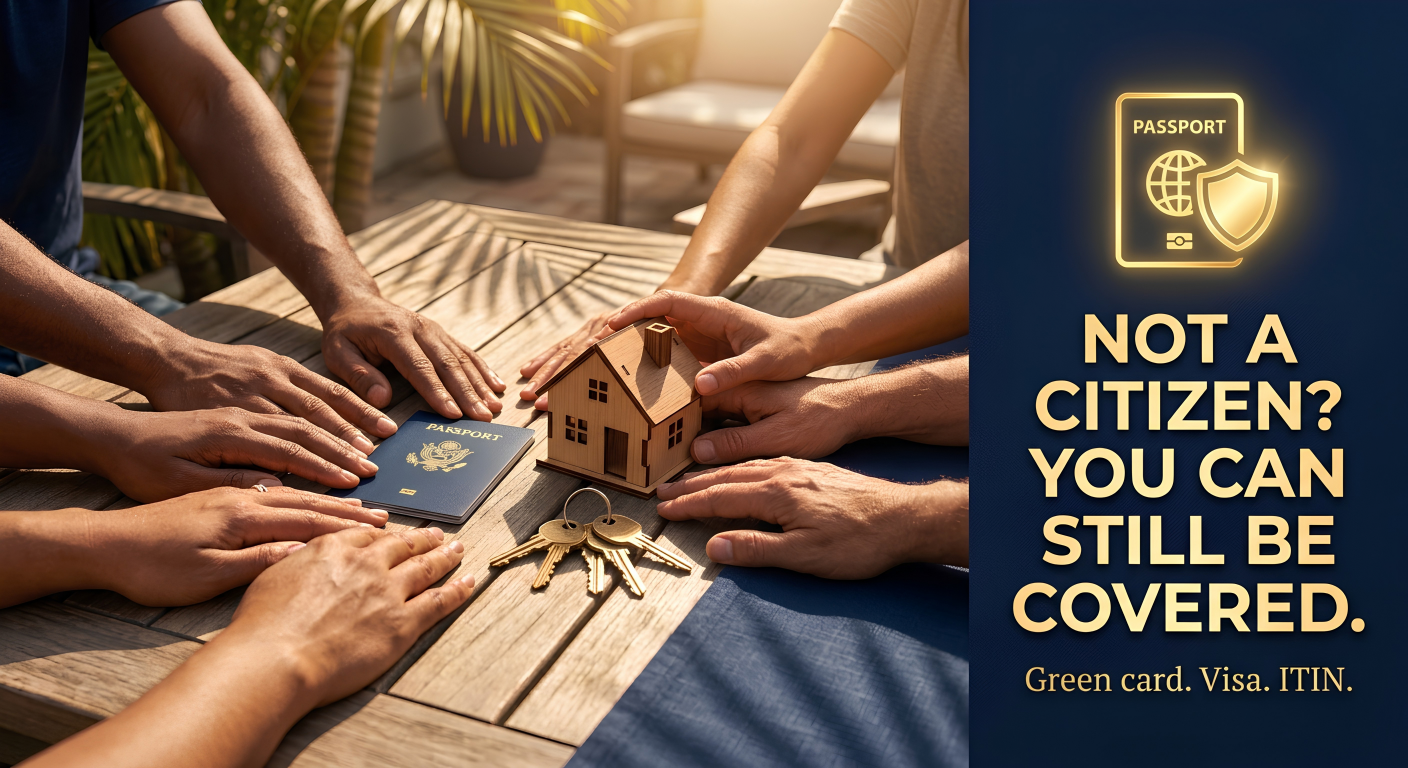
Can a Non-U.S. Citizen Buy Life Insurance in Florida? A Plain-English Guide for Foreign Buyers and Residents
You built a life here, or you are building one. You should not have to wonder whether you are even allowed to protect it.
- How green card, visa, ITIN, and non-resident status change your options
- The documents insurers commonly ask for
- The quiet requirements that surprise international applicants
- A free Eligibility Path Finder and Document Readiness Checklist
Maybe you moved here for work and bought a home in Orlando. Maybe you invest in Florida property from abroad. Maybe you came years ago, built a business, and have an ITIN instead of a Social Security number. Either way, someone depends on you, and you have probably wondered: “Will an American insurance company even insure me?”
We hear this question from international buyers, new residents, and ITIN holders all the time. It deserves a straight answer, and not a runaround.
The Honest Answer: It Depends on Your Status and Your Ties
There is no single rule, because every carrier sets its own guidelines. But the pattern is consistent enough to describe:
| Your situation | What it generally looks like |
|---|---|
| Green card holder (permanent resident) | Usually the widest range of options. Some carriers prefer a minimum period as a permanent resident, commonly around two years, with options for newer residents varying by carrier. |
| Living in the U.S. on a work or other visa | Many carriers will consider applicants on common work visa categories, but availability varies by visa type, how long it lasts, and the insurer. |
| ITIN holder | Some carriers accept an ITIN in place of a Social Security number for certain applicants. See our guide to life insurance for ITIN and visa holders. |
| Non-resident with U.S. property, business, or financial ties | More limited. Specialized programs may exist for people with strong U.S. ties, and underwriting is usually more involved. |
None of this is immigration advice, and eligibility is always decided by the insurer’s underwriting. The point is simple: the door is often open, and the right path depends on specifics.
Tell us your status and your goals. We will tell you honestly what is realistic.
Get a Free QuoteWhat Insurers Commonly Ask For
Preparing ahead is the best way to avoid delays. Typical requests include a passport and visa or immigration documents, a Social Security number or ITIN, proof of U.S. ties such as a property deed or employment contract, proof of income, a valid U.S. ID, and a medical exam. Some carriers also ask that the application be completed while you are physically in the United States and that premiums be paid in U.S. dollars from a U.S. bank account. Processing often takes longer than for a U.S. citizen because of the added verification.
If your beneficiaries live abroad, ask early whether the carrier supports that and how a claim would be paid. Practices vary.
Why This Matters for Florida Property Owners
If you own a home or rental in Florida, your family may inherit a mortgage, taxes, insurance, and maintenance bills along with the property. Life insurance gives them cash to keep things in order, whether that means paying the loan, covering costs, or selling on their own timeline instead of in a rush. Read more about this in what happens to a mortgage when you die and life insurance for real estate investors.
Free Tool: Eligibility Path Finder
Pick the situation closest to yours for a general sense of where to start. This is not an eligibility decision.
General education only. Eligibility is determined by each insurer. This is not immigration or legal advice.
Free Tool: Document Readiness Checklist
What To Do Next
Do not assume the answer is no, and do not apply to five carriers at once hoping one says yes. Multiple declines can complicate things. A better move is to talk with an agent who understands which carriers work with your situation, gather your documents, and apply once, to the right place. If you want to size your coverage first, try the free coverage calculator.
Your Status Should Not Leave Your Family Unprotected
Tell us where you are in the process. We will tell you honestly what is realistic and help you prepare, with no pressure.
Get a Free Quote Book a Free CallPrefer to talk? Call or text (407) 603-2733
Frequently Asked Questions
Can a non-U.S. citizen get life insurance in Florida?
Often yes. Many carriers insure non-citizens, but options depend on immigration status, time in the U.S., and ties to the country. Green card holders generally have the most options.
Can I get life insurance with a visa?
Many carriers consider applicants on common work visa categories, but availability varies by visa type, length of stay, and insurer. Ask which carriers fit your visa before you apply.
Can I get life insurance with an ITIN?
Some carriers accept an ITIN instead of a Social Security number for certain applicants. Guidelines vary by carrier and product.
Can a non-resident who owns Florida property buy life insurance?
Sometimes. Options are more limited and underwriting is more involved. Strong U.S. ties such as property, a business, and a U.S. bank account can help.
What documents do I need?
Commonly a passport, immigration documents, a Social Security number or ITIN, a valid U.S. ID, proof of income, proof of U.S. ties, and a U.S. bank account. A medical exam is typical.
Can my beneficiaries live outside the United States?
It depends on the carrier. Ask early whether beneficiaries abroad are supported and how a claim would be paid.