Key Person Insurance Requirements for Series A & B Term Sheets: What VCs Actually Ask For
Understanding the covenant before it shows up as a closing condition.
Why This Shows Up in Term Sheets at All
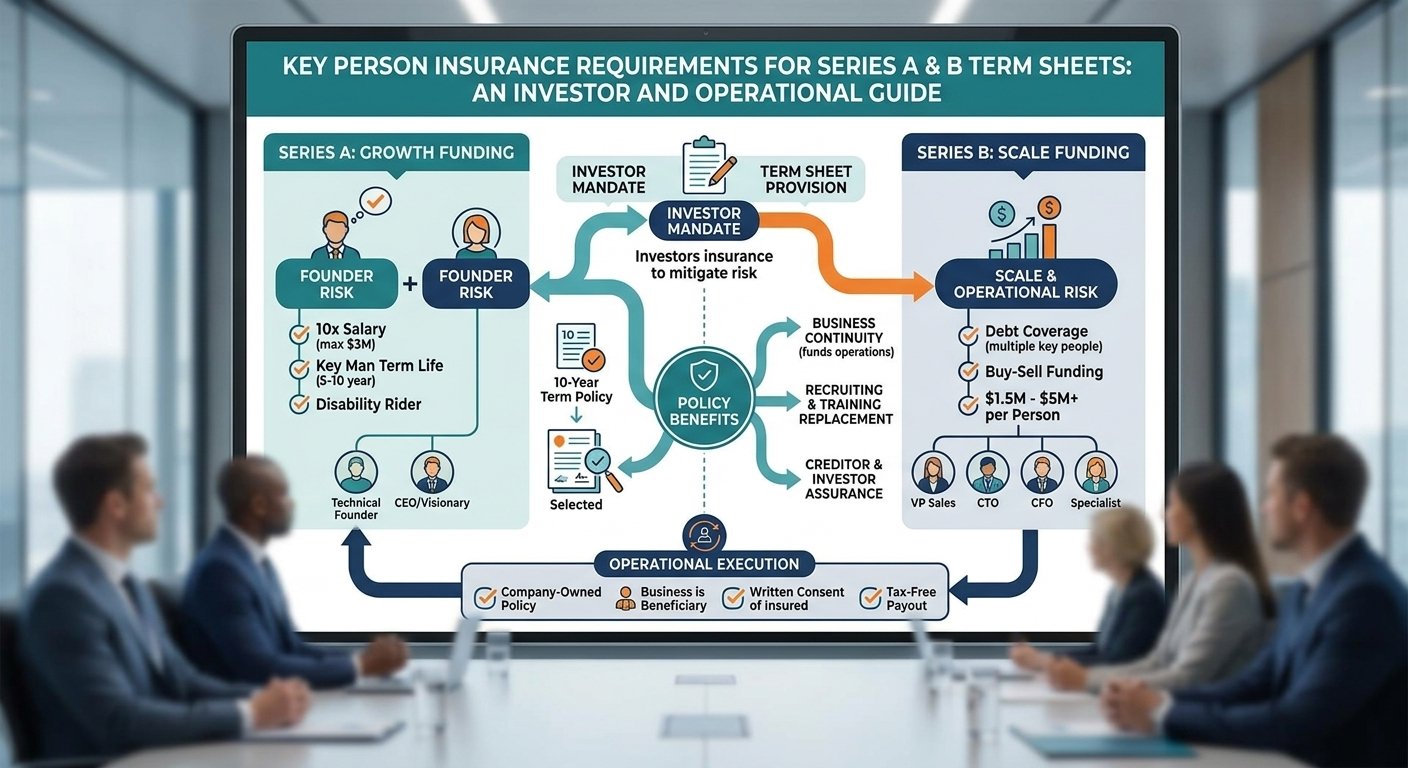
Venture investors are underwriting a bet on a small number of people as much as they’re underwriting a product or market. When a company’s technical direction, customer relationships, or fundraising credibility run through one or two founders, losing that person is a real operational risk — not just a personal tragedy. Key person insurance gives the company (and, indirectly, the investors) a funded buffer if that happens: a lump sum the business can use to cover a costly transition, recruit a replacement, or reassure customers and partners that operations continue.
What the Term Sheet Language Usually Covers
Term sheet insurance covenants typically go beyond simply requiring “a policy.” Investors commonly want to see the type of coverage, a minimum coverage amount, and confirmation of the insurer’s financial strength rating. It’s also common for term sheets to require the company to name investors as additional insureds, provide annual certificates of insurance, and notify investors of material changes or claims. None of that is negotiable in spirit — it’s designed to make sure the coverage is real, current, and verifiable, not just a line item that gets forgotten after the round closes.
How Coverage Amounts Get Set
There’s no universal formula. Coverage is generally sized to the round itself — the amount raised, the company’s monthly burn, and how many months of operational runway the company would need to recover from losing the named individual. A seed-stage company raising a small round will typically see a smaller ask than a Series B company with a large burn rate and enterprise customers depending on continuity.
Why Timing Matters More Than People Expect
The biggest mistake founders make with this covenant isn’t refusing it — it’s waiting until diligence to start the application. Underwriting for key person life insurance can take anywhere from a few days (for smaller, simplified-issue policies) to several weeks (if a medical exam or larger coverage amount is involved). If the covenant is a condition of closing, that underwriting timeline can become the pacing item for the entire round. Getting the application moving the moment a term sheet lands — not after signature — is the difference between a smooth close and a stalled one.
Have a Term Sheet With a Keyman Covenant?
We can review the language, size coverage to match what’s actually required, and move the application quickly so it isn’t the reason your round slips.
Learn About Key Person & Buy-Sell CoverageFrequently Asked Questions
Do all VC term sheets require key person insurance?
Not universally, but it’s one of the most common insurance covenants in venture term sheets, alongside D&O and cyber liability coverage. Whether it’s required often depends on the fund, the round, and how dependent the company is on one or two founders.
How much key person coverage do investors typically want?
There’s no single fixed amount — it’s usually negotiated based on the size of the round, the company’s burn rate, and how central the named individual is to the business. It’s sized to the risk, not set by a universal formula.
Can key person insurance delay a funding close?
Yes — if it’s a condition of closing and the policy isn’t in place yet, underwriting timelines can become the pacing item for the whole round. Starting the application as soon as the covenant appears in a term sheet helps avoid that.